
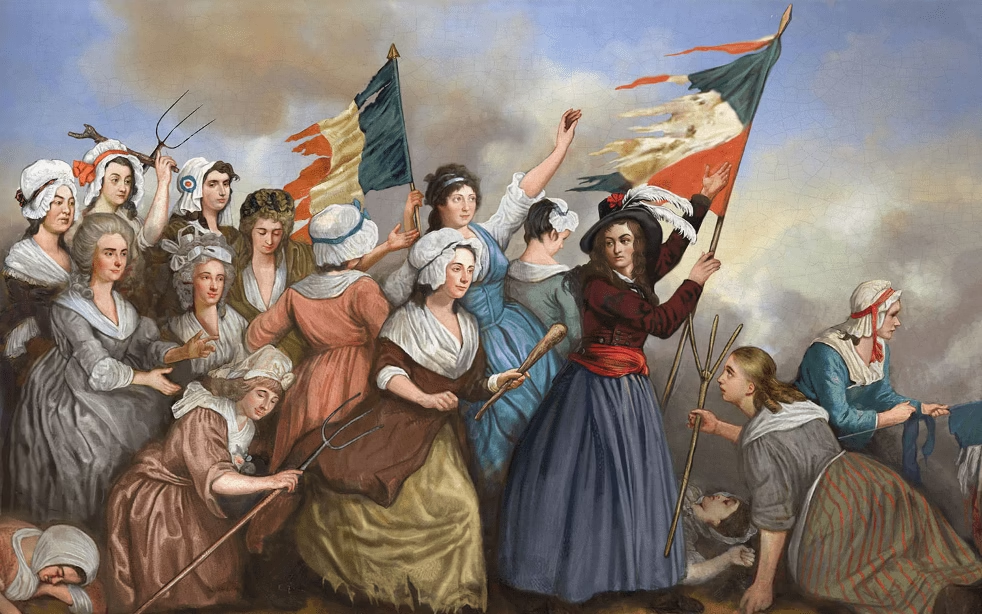
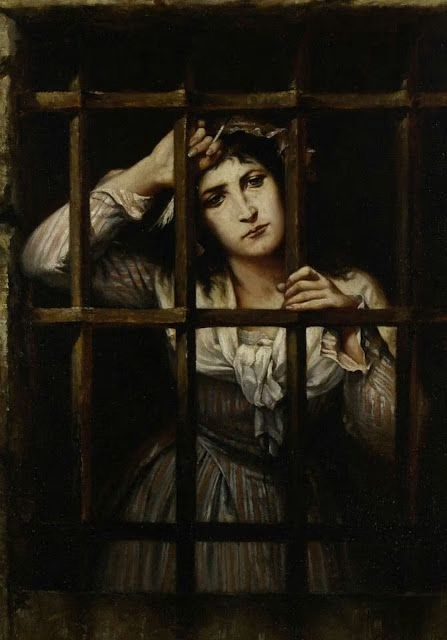
They lived, they died. Why does it matter now? Why did these people have to die? What were their crimes? What is the historical importance? It was shocking; yes, It was terrifying; yes, it happened long ago, yes, but we remember Robespierre, Saint-Just, Danton, Carrier and other key players of the French Revolution. Although upper class and Nobles shared their fair amount, the majority were the lower classes, tradesmen, and peasants of meager means suffered the most. , They came from all classes, upper-class, lower-class, tradesmen, and peasants, all died without ‘faces’. We don’t know anything about the victims, except as phantoms of the past. No one knew their names1, where they lived, worked for a living, had families, and a place in society, even scoundrels played their part. Now, they are forgotten. We will never know all the names and the true amount of the tens of thousands of victims who died in sieges, massacres, and murders across France, of which were never recorded.. We can draw from Jeri Walton’s excellent article which tells us that as many as 32,000 died in the Terror by those horrific acts.
After extensive statistical research by Donald Greer, the total amount of people who were judged, and sentenced to death from all of French departments during the Terror combined was 16,5942 , Keep in mind, those are the ones recorded, not the number who were murdered and massacred acrossed France willy-nilly. In Louis Prud’Homme’s accounting, a little over 14,000 victims were executed. However, this number also includes those who were sentenced to deportation instead of given a death sentence.
In Prudhomme’s volumes, you could find the names, the dates of executions, places of executions, and varying genealogical information for your French genealogy research.. Greer’s is strictly statistical break down into regions and departments including department maps of information. You can find names from Prud’hommes volumes from an ever growing searchable database here. So let us put a face to these victims of the French Revolution and attached the human element to know them better.